
Geopolitical Conflict and the Next Wave of Global Energy Infrastructure Investment: The Immediate Impact of the Iran War

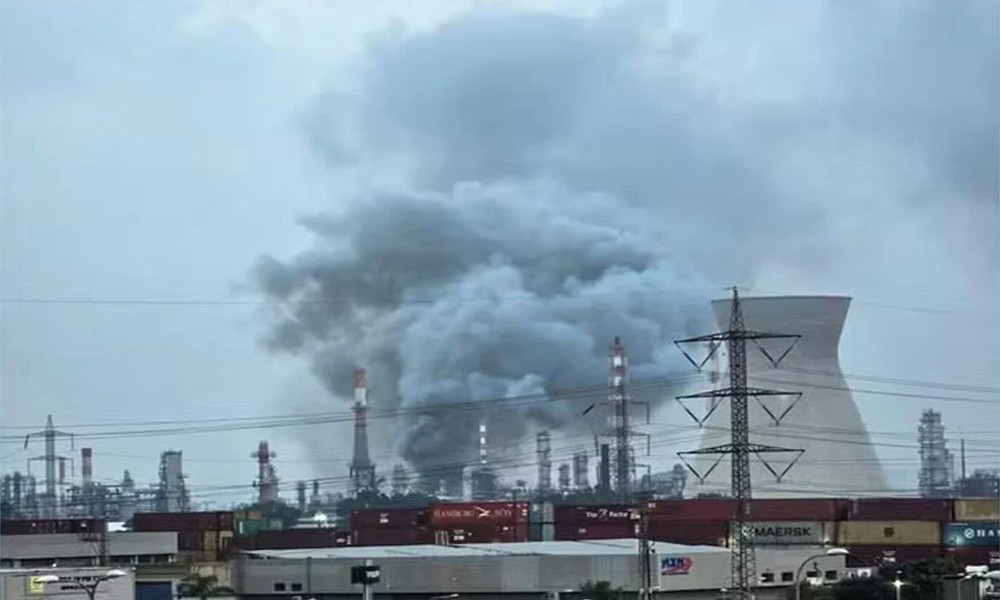
The ongoing war involving Iran, Israel, and the United States is no longer a theoretical geopolitical risk it is an active, market-moving event that is already reshaping global energy systems in real time.
In just weeks, the conflict has disrupted one of the most critical arteries of the global economy: the Strait of Hormuz, a maritime chokepoint through which roughly 20 percent of the world’s oil and gas flows. The near shutdown and militarization of this corridor has sent shockwaves through energy markets, global trade, and infrastructure planning.
Oil prices have surged above $110 per barrel, with some forecasts suggesting prices could exceed $150 or even $200 if key infrastructure is further damaged. At the same time, tanker traffic has been disrupted, insurance markets strained, and global supply chains destabilized.
According to National Standard, “This is not a temporary disruption-it is a structural inflection point. The war has exposed critical vulnerabilities in global energy logistics, and governments are already responding with accelerated infrastructure strategies.”
Its President, Russell Duke, explains: “What we are witnessing is the immediate repricing of energy security risk. That repricing will translate directly into trillions of dollars of new infrastructure investment over the next 5 to 10 years or less”
Immediate Impacts: A System Under Stress
The short-term effects of the Iran conflict are already severe and measurable:
- Disruption of tanker traffic and shipping routes
- Sharp increases in oil and LNG prices
- Volatility across global financial markets
- Supply shortages in energy-importing regions
The Strait of Hormuz has effectively become a contested security zone, with vessels delayed, rerouted, or unable to secure insurance coverage.
This is not just a regional issue. Energy markets are globally interconnected, and even temporary disruptions have cascading effects on:
- Electricity generation
- Industrial production
- Agriculture and fertilizer supply chains
- Inflation and monetary policy
As Russell Duke notes, “The immediate impact is price volatility. The longer-term impact is a complete reengineering of how energy moves around the world.”
Short-Term Response: Emergency Infrastructure and Supply Diversification
In response to the current conflict, governments and energy companies are already accelerating short-term infrastructure actions:
1. Strategic Storage Expansion
Countries are increasing strategic petroleum reserves and storage capacity to buffer against supply shocks.
2. Alternative Shipping Routes
Efforts are underway to bypass the Strait of Hormuz through:
- Overland pipeline expansions
- Red Sea and Mediterranean routing strategies
- Increased reliance on regional storage hubs
3. LNG Infrastructure Acceleration
Europe and Asia are fast-tracking LNG terminals to diversify away from constrained supply routes.
4. Security Enhancements
Military and private sector investments in protecting energy infrastructure are increasing rapidly.
These measures represent immediate responses, but they also signal a much larger structural shift.
Long-Term Transformation: A New Global Energy Infrastructure Map
Looking beyond the current conflict, the long-term implications are even more significant. The Iran war is likely to reshape global energy infrastructure development in several key ways:
1. Redundancy Over Efficiency
For decades, energy infrastructure prioritized efficiency and cost minimization. That model is changing.
Countries will now invest in redundant systems: multiple pipelines, ports, and supply routes-to ensure continuity during disruptions.
2. Regionalization of Energy Systems
Globalization of energy supply chains is giving way to regional networks, reducing dependence on high-risk transit corridors.
3. Expansion of Domestic Production
Energy-importing countries will invest heavily in domestic oil and gas production, even at higher cost, to enhance security.
4. Strategic Refining Capacity
Refineries will be built or expanded closer to demand centers to reduce reliance on imported refined products.
The Infrastructure Buildout: What Will Be Constructed
The scale and scope of new infrastructure expected as a result of this conflict include:
Upstream and Gas Development
- New exploration and production projects in North America, Africa, and Latin America
- Enhanced recovery in existing fields
Pipelines and Midstream Networks
- Cross-border pipelines bypassing maritime chokepoints
- Expansion of existing pipeline capacity
- Strategic interconnectors between regions
Refineries and Petrochemical Complexes
- New refining hubs in energy-importing regions
- Upgrades for flexibility and multi-feedstock processing
Ports and LNG Terminals
- Deepwater export and import facilities
- Floating LNG infrastructure
- Expanded storage and regasification capacity
Energy Security Infrastructure
- Physical protection systems
- Cybersecurity for operational technology
- Redundant systems and backup capabilities
The Scale of Capital Required
The investment required to support this transformation is enormous.
Industry estimates suggest that $2 trillion to $4 trillion in new oil, gas, and related infrastructure investment could be required globally over the next decade as a direct and indirect result of the current conflict and its aftermath.
This includes:
- Replacement of vulnerable infrastructure
- Expansion of capacity
- Development of new supply routes
- Integration of security and resilience measures
For institutional investors, this represents a generational opportunity.
Opportunities for Investors, Developers, and Governments
The Iran conflict has fundamentally shifted the risk-return profile of energy infrastructure.
Key opportunities include:
- Long-term contracted infrastructure assets with stable cash flows
- Public-private partnerships in strategic energy projects
- Expansion into emerging markets with strong resource bases
- Investment in logistics and storage infrastructure
However, these opportunities come with increased complexity and risk.
As National Standard emphasizes, “Capital will flow to projects that are properly structured to withstand geopolitical volatility. Poorly structured projects will not be financed, regardless of market demand.” Projects must be highly de-risked for institutional debt markets.
The Critical Role of Institutional Structuring
In this new environment, project success will depend on:
- Strong off-take and supply agreements
- Political risk mitigation and insurance
- Currency risk management
- Proven technologies and experienced operators
- Alignment with national energy strategies
Governments are also expected to play a more active role, providing guarantees, policy support, and co-investment to attract private capital.
Conclusion: From Crisis to Infrastructure Supercycle
The current war involving Iran, Israel, and the United States is not just a geopolitical event it is a catalyst for a global infrastructure supercycle in oil and gas.
The immediate disruptions to supply chains, pricing, and logistics are already driving urgent investment decisions. Over the longer term, these dynamics will reshape how energy is produced, transported, and secured worldwide.
As Russell Duke warns, “This is not just a defining moment it is a narrowing window of action. The nations and companies that move decisively now to build resilient, secure energy infrastructure will determine the balance of global energy power for decades to come.” He adds that sovereign national security will be shaped by the decisions made in the next 6 to 18 months, a critical period in which delay is no longer a neutral choice, but a strategic risk.
For governments, developers, and investors seeking to navigate this rapidly evolving landscape, National Standard provides not only American led infrastructure designed capital, but the strategic expertise to plan, design, structure, and finance complex and cross border infrastructure projects from policy through execution aligned with the demands of institutional investors and the realities of a new geopolitical era. It’s about alignment and execution.
For more information, visit:
National Standard Finance LLC (USA)