

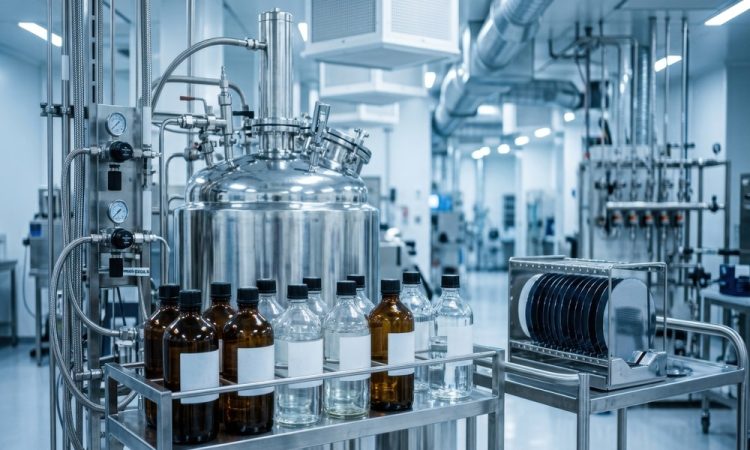
Nobody budgets for a ruined batch. But that is exactly what happens when the chemicals feeding a production line carry even small amounts of contamination. Purity sounds like a boring topic until it costs you a week of output and a pile of scrapped product.
The Trouble With Trace Amounts
Industrial chemistry depends on predictability. A solvent should evaporate at a known temperature. A blowing agent should expand at a known rate. A catalyst should kick off a reaction cleanly, without side effects. That predictability falls apart fast when contaminants show up uninvited. We are not talking about massive amounts of foreign material either. Sometimes a tenth of a percent of the wrong substance is enough to throw a whole reaction sideways. Products come out off-spec. Residues coat the insides of expensive equipment. Engineers hurriedly try to identify what malfunctioned. Here is where it gets frustrating. Contaminated batches don’t always look bad right away. Defects can go undetected until quality testing or a customer’s grievance uncovers them.
Some Industries Get Hit Harder
Pharmaceutical companies operate under brutal purity requirements. A solvent carrying even trace contamination into drug manufacturing can compromise an entire batch of medication. That is not just wasted money. It is a safety issue with regulatory consequences. Semiconductor fabrication lives in a similar world of extremes. Building microchips requires chemicals measured for purity in parts per billion. One stray molecule on a silicon wafer can destroy components worth more than most people’s cars.
Foam production catches grief from impurities too, though in less obvious ways. Contaminated blowing agents create uneven gas bubbles inside the foam structure. The insulation looks perfectly normal on the outside while quietly underperforming for years inside an appliance wall or building panel.
Machines Suffer Along With Products
Low purity chemicals do not just make bad products. They beat up the equipment producing them. Contaminants damage reactor walls, block valves, and form crusty deposits that take hours to remove. Unexpected downtime costs factories dearly. Every hour a production line sits idle is revenue that vanishes permanently. Tracing the source of the problem back to a bad chemical shipment can eat up days of investigation on top of the lost production time.
Cheap Chemicals Have Expensive Consequences
Commodity grade chemicals always win on sticker price. That is the whole pitch. But the real cost of inconsistent purity hides in places a purchase order never captures. Scrapped batches. Emergency maintenance. Missed delivery deadlines. Customer trust eroding slowly. Manufacturers using isopentane in foam, pharmaceuticals, and specialty processes need a reliable supply chain. Companies like Trecora fill that gap. They do so with high-purity hydrocarbons backed by tight statistical process controls and quality monitoring that hold steady from one shipment to the next. Paying a bit more per gallon for reliable chemistry almost always saves more money downstream than the discount on a cheaper alternative ever could.
Test Before You Trust
One of the most effective safeguards any manufacturer can put in place is dead simple. Test incoming chemicals before they enter the process. Match certificates of analysis against independent lab results. Reject anything that falls outside the acceptable window. Sounds obvious. But a surprising number of expensive production failures trace back to someone assuming a shipment was fine without checking.
Conclusion
Purity is not a luxury or a technicality buried in a spec sheet. It is the thing holding an entire manufacturing operation together. Let it slip and the consequences spread through products, equipment, timelines, and customer relationships. Good chemistry starts with clean raw materials. Everything downstream depends on it.